If you are shopping for equipment, compare machines within the same technology type before looking at price or feature counts.
Start with the type of shockwave machine
Shockwave therapy machines are not all built around the same technology. The most important first distinction is between radial pressure-wave systems and focused shockwave systems.
Radial systems deliver their highest pressure near the applicator and spread energy outward through the tissue. Focused systems concentrate acoustic energy into a defined target area. That difference affects the equipment design, the specifications worth comparing and the situations in which a clinician may choose one technology over another.
What to compare before buying
- Radial or focused technology: establish which type of system fits the intended application before comparing brands.
- Intended use: check the manufacturer’s labeling and whether the device is intended for professional, clinical or other use in your country.
- Output controls: compare the relevant pressure or energy settings, frequency range and pulse controls for that type of machine.
- Applicators and heads: look at the included sizes, replacement availability and compatibility.
- Size and portability: a compact desktop machine and a cart-based clinical system suit very different spaces and uses.
- Maintenance: ask which parts wear out, their expected service intervals and how easy replacements are to obtain.
- Support and warranty: consider training, documentation, repair turnaround and warranty coverage alongside the purchase price.
Radial vs focused machines
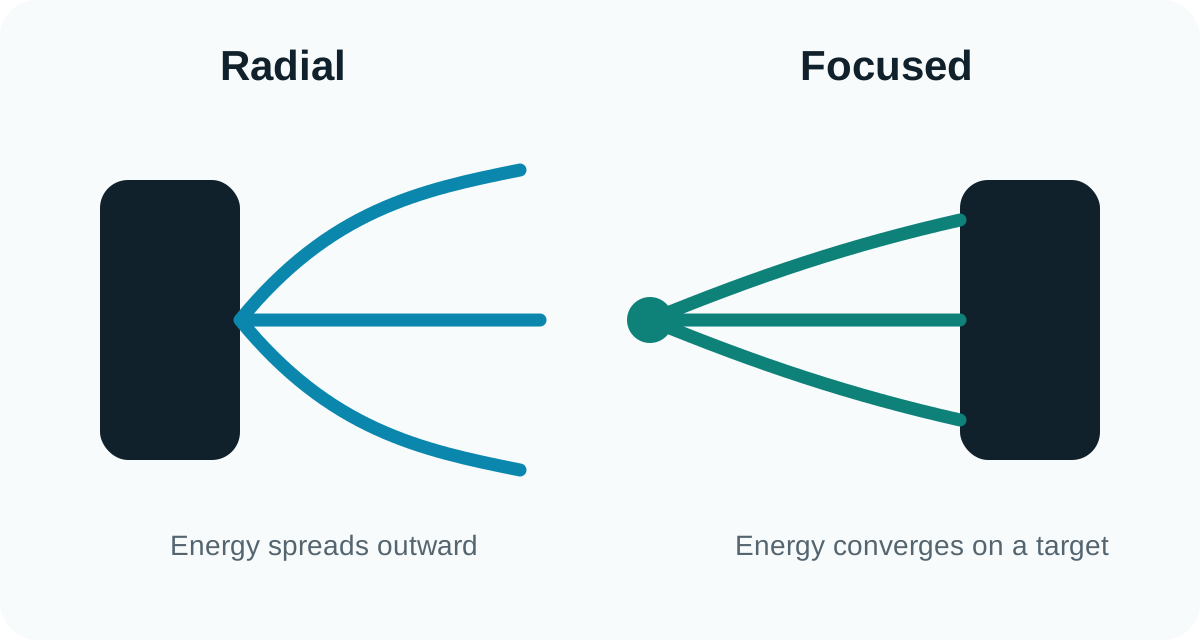
| Feature | Radial systems | Focused systems |
|---|---|---|
| Energy pattern | Highest near the applicator and disperses with depth | Concentrated in a defined focal area |
| Common form factor | Often compact or desktop | Often more specialized clinical equipment |
| Specifications commonly compared | Pressure, frequency, applicators, handpiece and service life | Energy flux density, focal depth/volume and targeting |
| Best comparison approach | Compare with other radial systems | Compare with other focused systems |
For a deeper explanation, see our radial vs focused shockwave machine comparison.
Where Shock Vitalize fits
Shock Vitalize currently offers four models—LITE, MEGA, EVO and PRIME—with different sizes, interfaces, included heads and published specifications. They are most useful to compare with other radial-style systems rather than with focused ESWT equipment.
If you are considering the brand, start with our LITE vs MEGA vs EVO vs PRIME comparison or read the full Shock Vitalize guide.
Don’t choose on specifications alone
Higher pressure, more presets or a longer feature list does not automatically make a machine more suitable. For medical use, the relevant evidence, contraindications, device labeling and professional guidance matter alongside the hardware.
If you are new to the technology, read what shockwave therapy is and our guide to shockwave machine specifications before comparing individual models.
Considering Shock Vitalize?
Compare the current models, included equipment and pricing on the manufacturer’s website.
We may earn a commission if you buy through this link.
See current Shock Vitalize optionsSources & verification
References used for the product specifications and health information on this page are listed below.